Everyday Life Around Columbia’s Lakes And Village Centers
May 21, 2026
May 21, 2026
What makes Columbia feel so livable day to day? For many people, it comes down to how easily ordinary routines can fit around lakes, pathways, and village centers instead of feeling like separate weekend plans. If you are trying to picture what daily life here actually looks like, this guide will help you understand how Columbia’s layout shapes errands, outdoor time, and community connection. Let’s dive in.
Columbia is a planned community founded in 1967 as part of James Rouse’s vision, and today it is home to roughly 100,000 residents. According to Columbia Association, the community is made up of 10 distinct villages connected by wooded pathways and located near parks, lakes, pools, play areas, and open space.
That structure matters when you are deciding where to live. Instead of revolving around one single commercial core, Columbia often feels organized around several neighborhood nodes, with village centers, community spaces, and open areas spread throughout the community.
Village centers were originally conceived as neighborhood shopping centers anchored by grocery stores and supported by services like salons, casual dining, dry cleaning, banks, and other service-oriented uses. In practical terms, that means many everyday stops are designed to be close to home.
If you are picturing what that looks like in real life, it may mean combining a grocery run with a quick lunch, a coffee stop, or another errand in the same trip. That neighborhood-centered design is one reason Columbia can feel convenient without requiring every activity to happen in one place.
Columbia Association lists these villages:
Each village has its own independent nonprofit community association. These associations host programs and events, work with village merchants, and maintain village buildings and neighborhood centers.
While village centers share a similar everyday purpose, each village has its own association and distinct character. That means your routine may feel a little different depending on where you live, even though the broader idea stays consistent across Columbia.
This is helpful for buyers because it gives you more than one way to experience Columbia. You are not just choosing a house. You are also choosing the mix of pathways, parks, lakes, gathering spaces, and nearby conveniences that may shape your week.
Columbia Association maintains more than 3,600 acres of open space, including 171 parks and tot lots, 41 ponds, 34 miles of stream valleys, and the 40-acre Symphony Woods. It also maintains three man-made lakes that play a big role in how people experience the community.
Those three lakes are Lake Kittamaqundi in Town Center, Lake Elkhorn in Owen Brown, and Wilde Lake. Lake Kittamaqundi is 27 acres, Lake Elkhorn is 37 acres, and Wilde Lake is 22 acres and flows downstream into Lake Kittamaqundi.
Columbia Association lists common outdoor uses across its open space areas such as:
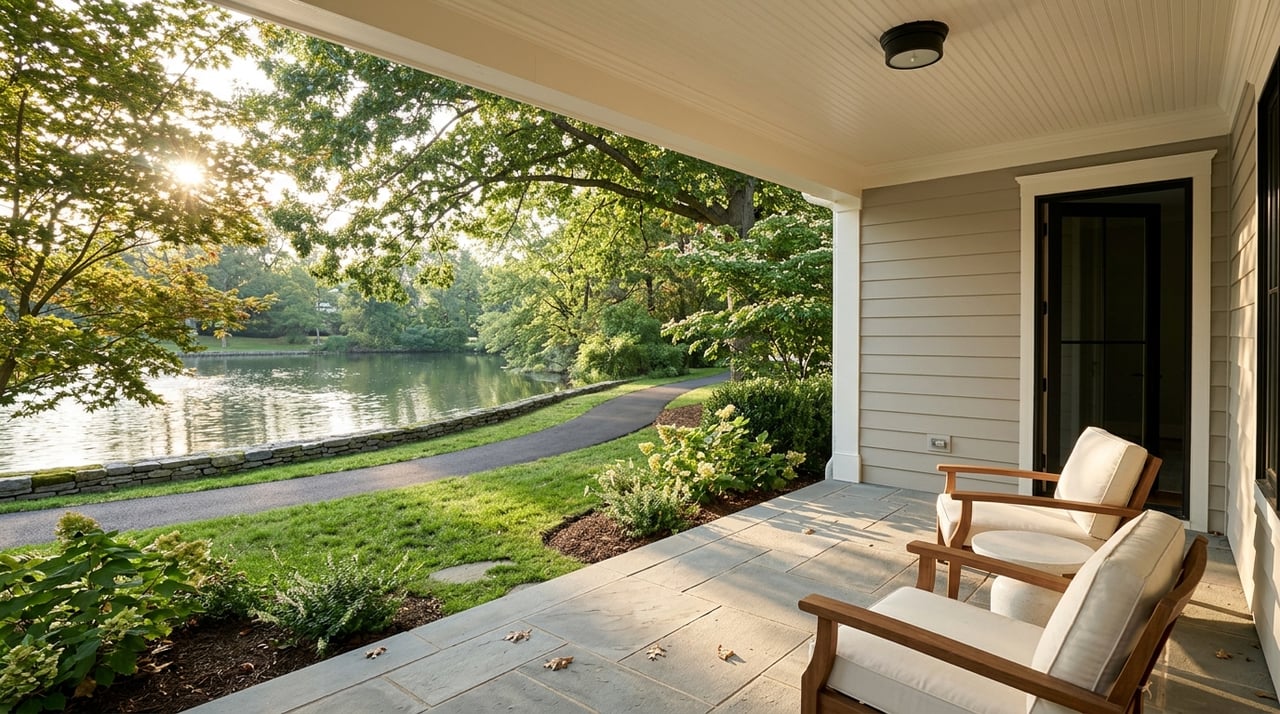
For many residents, the value of the lakes is not just recreation. They also add a scenic backdrop to ordinary routines, whether you are taking a walk after work, meeting someone nearby, or spending part of your weekend outdoors without leaving Columbia.
It is also important to know that Columbia Association does not allow swimming, bathing, or ice-skating on its lakes or ponds. That helps set the right expectations if you are new to the area and trying to understand how these spaces are used.
One of Columbia’s most defining features is its pathway network. Columbia Association says it maintains 114 miles of pathways, and those pathways are separated from vehicular traffic.
That separation helps explain why walking and biking can feel built into everyday life here rather than saved for special occasions. For some households, a path walk may become part of a morning routine, an after-dinner habit, or a practical way to reach a nearby park or community spot.
The pathway system connects with the larger open-space network, which includes parks, tot lots, lakes, and stream valleys. That means outdoor access is not limited to a few standout destinations. It is spread across the community in a way that supports repeated, shorter outings throughout the week.
If lifestyle matters in your home search, this is worth paying attention to. A neighborhood with easy access to pathways and open space can shape how often you actually get outside.
The CA Lakefront at Lake Kittamaqundi is presented by Columbia Association as a year-round gathering place and the heart of Columbia. It is home to Lakefront Live and community celebrations, and it is designed to be a people place.
Lakefront Live offers free summer music, movies, and special events. With nearby places to eat, the lakefront works as both a scenic stop and a social one, making it easy to blend an event, a meal, and time outdoors in the same outing.
When people think about convenience, they often think about shopping or commuting. In Columbia, convenience also includes having spaces where you can meet up, attend an event, or simply spend time outside without planning a full day around it.
That mix of utility and enjoyment is part of what gives Columbia its rhythm. You can run errands in a village center, then pivot into a walk, an event, or a casual meet-up by the water.
Howard County’s transportation demand-management program encourages biking, walking, transit, ridesharing, vanpooling, non-peak commuting, and telecommuting. The county says the Regional Transportation Agency runs 15 fixed routes and paratransit service.
Downtown Columbia is served by both the RTA and the Maryland Transit Administration, with connections to other systems. Howard County also says Flash Bus Rapid Transit is scheduled to extend into Howard County along the US 29 corridor in 2026.
Columbia’s pathways and transit options can support car-light routines for some trips, especially when your destination is nearby or connected through Downtown Columbia. At the same time, Howard County frames commuting as multimodal rather than fully car-free.
That is a useful distinction if you are relocating from a denser area. Columbia offers flexibility, but your day-to-day transportation pattern may still include a mix of driving, walking, biking, transit, or park-and-ride use.
The Maryland State Highway Administration’s park-and-ride map shows Columbia-area lots at:
Howard County’s BikeHoward Express materials also describe new shared-use pathways that would provide bicycle access into Downtown Columbia, Columbia Gateway, and along Dobbin Road, while linking to schools, parks, MARC stations, park-and-ride lots, and key employment centers.
If you are considering a move to Columbia, lifestyle may come down to more than square footage or finishes. You may also want to think about how close you want to be to a village center, a pathway connection, a lake, or Downtown Columbia amenities.
For some buyers, being near a village center may support easier weekday errands. For others, pathway access or proximity to the lakefront may matter more because it better fits the routine they want to build.
A helpful way to compare areas is to think through your real week, not your ideal one. Ask yourself where you are most likely to spend time, what kinds of short trips you make often, and whether outdoor access or transit connections would meaningfully improve your routine.
That kind of lifestyle-based thinking can make your home search feel clearer. It helps you match the home to the way you actually live, not just to a checklist.
Taken together, Columbia’s lakes, village centers, events, and transportation options support a routine built around repeated short trips. You might walk a path, pick up groceries, meet friends by the lake, or use transit or a park-and-ride option when the destination is farther away.
That does not mean every household uses Columbia the same way. It does mean the community was designed to make those kinds of connected routines more realistic, which is a big part of why everyday life here stands out.
If you are exploring Columbia and want help thinking through which area best fits your day-to-day needs, working with a team that knows how to connect lifestyle and home search strategy can make a big difference. The Thomas Team is here to help you navigate Columbia with clear guidance and a plan that fits your goals.
Stay up to date on the latest real estate trends.
Collaborate with a team that truly understands your vision, prioritizes your goals, and works alongside you every step of the way. Experience clear, consistent communication, thoughtful planning, and a commitment to delivering results you can trust—executed with confidence, precision, and a shared drive for success.